Heated Mirror Glass Manufacturer — Defrost & Defog Side Mirror Glass

Heated mirror glass is side or wing mirror glass with a thin electrical heating element bonded to the back of the reflective surface, which warms the glass to clear frost, ice, fog and condensation from the exterior mirror.

Heated side mirror glass and heated wing mirror glass for passenger cars, trucks and buses, supplied in 12V and 24V versions with connector terminals matched to your drawing. Flat, convex R1230 ±30 / R1260 ±60 and deep-curve R320 versions, chrome anti-glare coating, with blind-spot (BSD) marking on request — produced on the same IATF 16949 line as our 1,000,000 monthly mirror glass output.

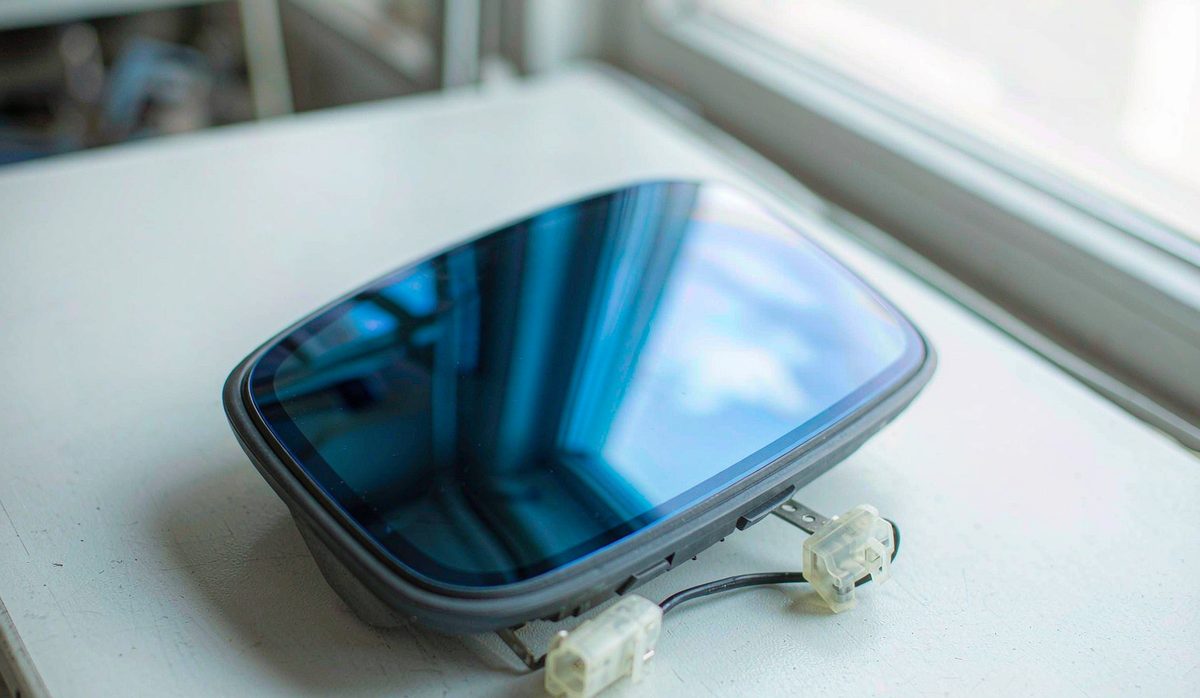
Heated side mirror glass with bonded heating element and electrical connectors

Clear Vision in Frost, Ice and Fog

In cold and humid markets a mirror that fogs over is a warranty claim, and a mirror that ices over is a safety defect. Heated glass is what turns a plain replacement part into a sellable SKU — and what lets an OEM mirror program pass defrost and defog validation.

We bond the heating element to the back of the glass, behind the reflective coating, then fit the terminals your assembly drawing specifies. Every piece is powered on before packing, so a dead element never reaches your line.

  • Heating element behind the glass: no wires or traces on the viewing surface, nothing to scratch or clean around
  • 12V for passenger cars, 24V for trucks and buses: power rating matched to your vehicle specification
  • Defrost and defog: fog clears in under a minute, frost and ice within a few minutes at rated voltage
  • Combines with any geometry: flat, convex R1230 ±30 / R1260 ±60, deep-curve R320, aspheric and dual-curve
  • Terminal options: 4.8 mm or 6.3 mm spade, pigtail wire, or sealed plug per drawing
  • Finishes: chrome (front-surface or rear-surface) or standard silver, with BSD symbol, Arabic text or your logo screen printed in-house
Request Heated Glass Quote

Technical Specifications

ParameterSpecificationNotes
Product typeHeated mirror glass with back-bonded heating elementFlat, convex or aspheric
Rated voltage12V DC / 24V DCMatched to vehicle system
Heating power1.0–2.5 W per dm²Tuned to your defrost target
Defrost performanceFog cleared < 60 s; frost and ice 2–5 minAt rated voltage, −10 °C ambient
Operating temperature−40 °C to +80 °CThermal cycling tested
CurvatureFlat / R1230 ±30 / R1260 ±60 / R320Other radii per drawing
Glass thickness2.0 / 3.0 mmTypical options
CoatingChrome (front or rear surface) / silverCorrosion tested per lot
Terminals4.8 / 6.3 mm spade, pigtail wire, sealed plugPer customer drawing
MarkingsBSD symbol, Arabic text, custom logoScreen printed in-house
Testing100% power-on and resistance checkPlus thermal cycling sample test
MOQ3,000 pcs per SKUSamples negotiable
Lead time15–25 days after depositQuantity dependent

Typical values — confirm against your drawings.

Where Heated Mirror Glass Sells

❄️

Cold-Climate Replacement Market

Distributors in Russia, Northern Europe, Canada and northern China stock heated glass as the default SKU — it is the first part a driver asks for after the first frost.

🚚

Trucks & Buses (24V)

24V heated glass for commercial vehicle mirrors, including the large main and wide-angle glass used on FAW J6, J7 and K90 class trucks.

🏭

Assembly Plants & OEM Programs

Heated glass supplied to mirror assembly lines with per-lot inspection reports, matched terminals and scheduled delivery against your production plan.

Heated, Convex and Anti-Glare — One Part, One Supplier

Most heated mirror glass is not just heated. It is also convex or aspheric for a wider field of view, and chrome anti-glare coated to cut headlight glare at night. Because cutting, bending, coating, screen printing and heater bonding all happen in our own plant, those layers stay aligned batch after batch instead of being re-sourced from three different suppliers. If you buy by vehicle model instead of by specification, start from our OEM replacement mirror glass range and ask for the heated version of any listed part.

Heated Mirror Glass Buying Questions

Can you match the connector on my drawing?

Yes. Send the terminal type (4.8 mm or 6.3 mm spade, pigtail wire or sealed plug), wire length and polarity, and we will build the heater to that drawing. For existing part numbers, send the OE reference or a photo of the back of the original glass.

Do you supply heated glass in small quantities for testing?

Sample orders are negotiable below the 3,000 pcs per SKU MOQ. Samples are built on the production line, not by hand, so the defrost performance you measure is the performance you receive in volume.

What is the difference between front-surface and rear-surface coating on heated glass?

Front-surface (chrome) coating sits on the outside of the glass and gives the brightest, most mirror-like image; rear-surface coating sits behind the glass and is more tolerant of cleaning. Both are available heated — the heater is bonded behind the coating either way, so defrost works through the glass, not on it.

What Actually Decides How Fast the Mirror Clears

Buyers usually specify voltage and stop there. Voltage is the least interesting variable — these are the five that decide whether the lens clears in the time your customer expects.

FactorHow it moves the resultWhat to put in the enquiry
Power density (W/dm²)Higher density clears faster, but loads the vehicle circuit and raises the edge temperatureThe defrost time you need, not just a wattage
Glass thicknessThicker glass carries more thermal mass, so the same element takes longer to reach the surface2.0 / 3.0 mm, plus whether response time or durability comes first
Ambient temperatureColder air widens the gap the heater has to close, so a lens that clears fog quickly may still be slow on thick iceThe coldest market you sell into
AirflowMoving air pulls heat off the surface, so a bench test in a workshop is optimistic against a lens at motorway speedWhether the test will be static or on-vehicle
Terminal contactA weak crimp burns power at the joint instead of in the glass, and shows up as a slow lens that tests fine on resistance aloneConnector type, and whether a pigtail is acceptable

This is why we ask for a defrost target rather than a wattage. Given the target, ambient and thickness, the element geometry follows — and we will tell you if the target is not reachable at your voltage rather than shipping something that nearly works.

How the Heater Is Built Onto the Glass

The heating element sits on the back face, so nothing sits between the driver and the reflective coating. Five steps, each with its own failure mode if it is rushed:

1
Element cutting
Heating film cut to the lens profile, terminals placed per drawing
2
Lamination
Bonded to the back face with controlled pressure — air pockets become hot spots
3
Terminal crimping
Spade, pigtail or sealed plug, crimped and strain relieved
4
100% electrical test
Every piece powered and resistance checked, not sampled
5
Thermal cycling
Sample units cycled between temperature extremes before the batch is released

The Three Failures to Look For in a Heated Lens Sample

You can spot most heater problems on a sample before you place an order. None of them require a laboratory.

De-bonding at the terminal

Tug the wire gently. If the film lifts at the joint rather than the crimp holding, the bond will fail in service — usually after the first winter, which is the worst time to find out.

Uneven clearing

Power the lens and watch the fog line. It should retreat evenly from the centre out. A patch that clears last is a lamination air pocket or a poorly distributed element.

Resistance drift

Measure resistance cold, then again after a power cycle. A reading that moves noticeably means the element or the crimp is changing under heat, and the lens will keep drawing more current over its life.

More Heated Mirror Glass Questions

Procurement questions that come up once the sample has been accepted.

Can a heated lens carry the same coatings as an unheated one?▼
Yes — chrome front or rear surface and standard silver both work with the element on the back face. The coating choice is made independently of the heating decision, so nothing has to be traded away.
How much current does a heated mirror draw?▼
It follows from the power density you need: at 1.0 to 2.5 W per dm² across a typical exterior lens, expect a load of a few amps at 12 V, roughly half the current at 24 V for the same wattage. Tell us the fuse rating on the vehicle side and we will fit the element inside it.
Can you produce a heated version of a model you already supply unheated?▼
Yes. The glass, shape and coating stay the same; what changes is the back-face element, the terminal position and the test routine. Because both versions run in our plant, the two stay fit-compatible instead of drifting apart between suppliers.
What happens if a heater fails inside the warranty period?▼
Because every piece is powered and resistance-tested before packing, a dead-on-arrival element points to handling rather than production. Send us the batch code from the crate label and we trace it to the coating and lamination run, then replace within the agreed rate.

Need Heated Mirror Glass in Volume?

Send your voltage, dimensions, connector drawing and monthly quantity for a full quote within 24 hours.

Request Quote Now